
From Zero to Motion: A Beginner's Roadmap to Learning Animation in 2026
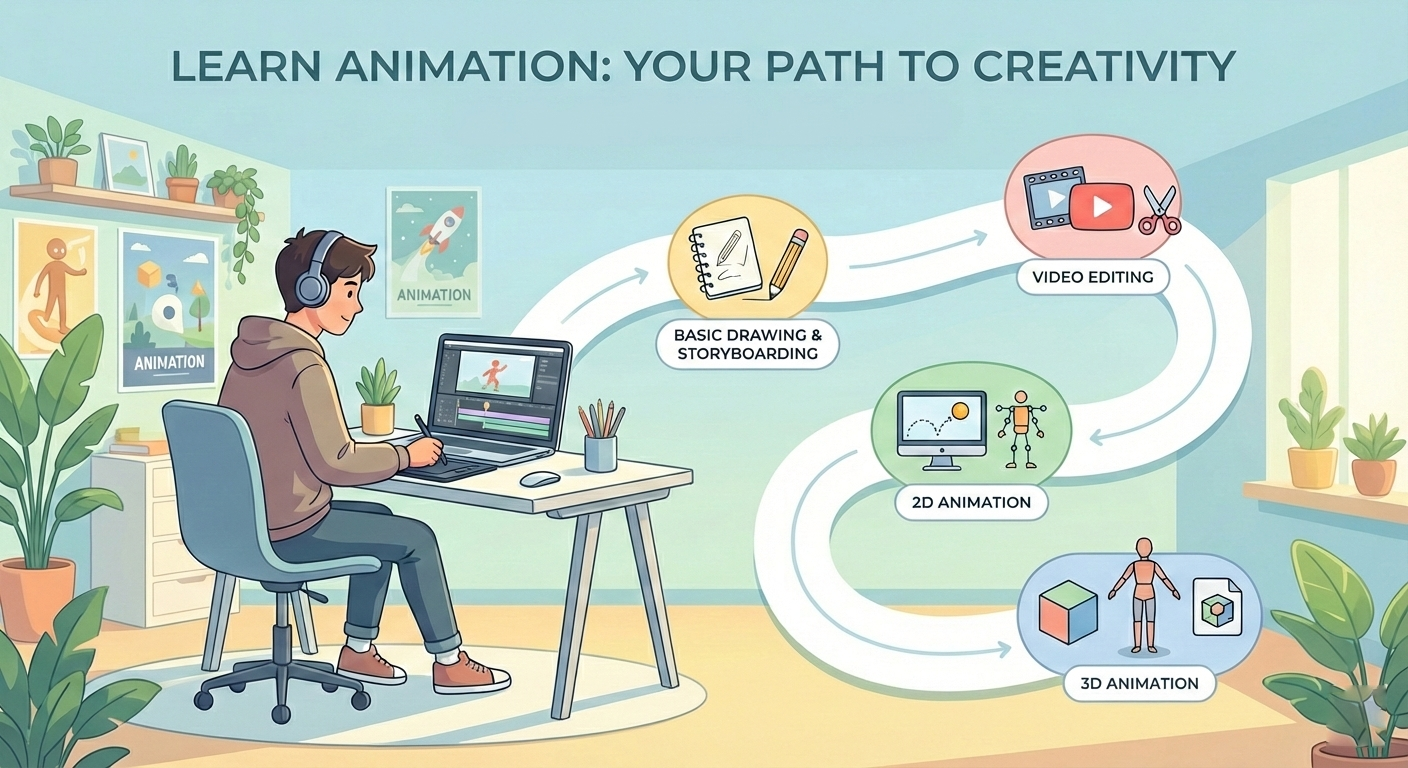
From Zero to Motion: A Beginner's Roadmap to Learning Animation in 2026
Animation in 2026 is no longer limited to films and cartoons. It's used in social media, advertising, gaming, UI design, and digital content. If you're starting from scratch, learning animation may feel overwhelming—but with the right roadmap, beginners can become job-ready within a year.
This guide is designed to help you learn animation for beginners in a structured, practical, and realistic way.
1. Animation Basics Every Beginner Should Know
Animation is the illusion of movement created through images shown in sequence. More than movement, it's about timing, emotion, and storytelling.
Beginner-Friendly Animation Types
- **Motion Graphics** – Best starting point; used in ads, reels, and branding
- **2D Animation** – Character and explainer animations
- **3D Animation** – Used in films, gaming, and VFX (advanced level)
👉 Start with Motion Graphics, then move to 2D or 3D.
2. Core Animation Principles (Foundation Stage)
All animation is built on the 12 Principles of Animation, including:
- Timing & Spacing
- Squash & Stretch
- Anticipation
- Slow In & Slow Out
- Follow Through
Beginner Practice Exercises
- Bouncing ball
- Pendulum swing
- Simple walk cycle
These exercises build strong fundamentals faster than software tutorials alone.
3. Choosing the Right Software
Free Tools for Beginners
- **Blender** – 3D animation
- **Pencil2D / Krita** – 2D animation
- **DaVinci Resolve** – Video + motion basics
Industry-Standard Tools
- **Adobe After Effects** – Motion graphics
- **Adobe Animate / Toon Boom** – 2D animation
- **Maya / Cinema 4D** – 3D animation
👉 Beginners should start free and shift to professional tools gradually.
4. 12-Month Beginner Animation Roadmap
Months 1–3: Foundations - Learn animation principles - Practice basic motion - Explore animation styles
**Outcome:**
✔ Strong basics
✔ 3–4 small projects
Months 4–6: Skill Building - Learn animation software - Create logo and text animations - Improve timing and transitions
**Outcome:**
✔ Portfolio-ready work
Months 7–9: Specialization Choose one focus area: - Motion Graphics - 2D Animation - 3D Animation
**Outcome:**
✔ Clear direction
✔ Advanced projects
Months 10–12: Professional Prep - Build demo reel - Create portfolio website - Apply for internships, freelance, or jobs
**Outcome:**
✔ Job-ready portfolio
5. Skills That Make a Good Animator
- Observation & basic drawing
- Storytelling
- Color and design sense
- Sound and rhythm understanding
These skills significantly improve animation quality.
6. Beginner Portfolio Essentials
A strong beginner portfolio should include:
- 1 motion graphics project
- 1 character or walk cycle
- 1 creative personal project
**Quality > Quantity**
7. Career Options After Learning Animation
- Junior Animator
- Motion Designer
- Social Media Content Animator
- Freelance Animator
**Beginner salary range:** ₹2.5–5 LPA or freelance ₹20k–60k/month